

Introduction
The Ultraviolette Shockwave 2027 is preparing to enter India’s electric motorcycle market with an unusual combination of lightweight construction, off-road-inspired styling and responsive electric performance.
First unveiled in March 2025, the Shockwave is Ultraviolette Automotive’s interpretation of a fun-focused dual-sport motorcycle. Unlike the company’s performance-oriented F77 models, the Shockwave has been designed to prioritise agility, accessible performance and the freedom to explore different riding conditions.
The Bengaluru-based manufacturer has now confirmed an important technical update. The production Shockwave will adopt its newly developed 100V electrical architecture, replacing the earlier engineering configuration.
The updated motorcycle is scheduled to launch in the first quarter of 2027, with single-seat and dual-seat versions planned.
Originally presented with 14.5 hp, a claimed top speed of 120 km/h and a 165 km riding range, the Shockwave offers an interesting alternative to conventional petrol-powered dual-sport motorcycles.
However, Ultraviolette has not yet released the complete specifications of the revised 100V production version.
Read It: Bike Insurance Companies 2026: Motorcycle Insurance Guide by Country
Ultraviolette Shockwave 2027: Key Specifications
| Specification | Details |
|---|---|
| Model | Ultraviolette Shockwave |
| Model Year | 2027 Launch |
| Motorcycle Type | Electric Dual-Sport / Funduro |
| Electrical Architecture | New 100V |
| Motor Type | Interior Permanent Magnet Synchronous Motor |
| Previously Announced Power | 14.5 hp |
| Previously Announced Rear-Wheel Torque | 505 Nm |
| Previously Claimed Top Speed | 120 km/h |
| Acceleration | 0–60 km/h in 2.9 Seconds (Earlier Claim) |
| Previously Announced Battery | 4 kWh |
| Previously Claimed IDC Range | 165 km |
| Transmission | Automatic Electric Drive |
| Front Wheel | 19-inch Spoked |
| Rear Wheel | 17-inch Spoked |
| Front Suspension Travel | 200 mm |
| Rear Suspension Travel | 180 mm |
| Display | 5-inch Colour TFT |
| Braking | Switchable Dual-Channel ABS |
| Weight | 120 kg (Earlier Announced) |
| Previously Announced Price | ₹1.75 Lakh Ex-Showroom |
| Revised Launch Timeline | Q1 2027 |
Note: The motorcycle’s new 100V architecture and Q1 2027 launch window have been confirmed. Several performance figures listed above belong to the originally unveiled version and may change for the production model.
Electric Motor & Performance
The Ultraviolette Shockwave has been developed to deliver an engaging riding experience inspired by the lightweight two-stroke motorcycles of the past.
Rather than focusing only on maximum power, Ultraviolette has designed the Shockwave around responsive acceleration, low weight and playful handling.
The originally unveiled model featured an Interior Permanent Magnet Synchronous Motor producing 14.5 hp.
Ultraviolette also quoted 505 Nm of torque at the rear wheel. This figure represents torque delivered through the motorcycle’s reduction gearing and should not be confused with the motor’s direct output torque.
Acceleration & Top Speed
The initially announced Shockwave was claimed to accelerate from 0 to 60 km/h in approximately 2.9 seconds.
Its advertised maximum speed was 120 km/h.
For a lightweight dual-sport motorcycle, this combination could provide responsive performance during city riding and short highway journeys.
However, final acceleration and top-speed figures for the new 100V version have not yet been confirmed.
New 100V Architecture
The biggest development for 2027 is the introduction of Ultraviolette’s dedicated 100V electrical architecture.
The company says this technology is intended to improve power delivery, thermal efficiency and charging capability.
Improved thermal management is particularly important for electric motorcycles used in demanding riding conditions, where repeated acceleration and uneven terrain can place additional loads on the drivetrain.
The new architecture is also being used for Ultraviolette’s upcoming Tesseract electric scooter.
Although both vehicles share the 100V technology, the Shockwave has been engineered for a different riding experience.
Ultraviolette Shockwave 2027 Battery & Range
Battery range is an important consideration for customers planning to use the Shockwave for daily commuting and weekend exploration.
The original motorcycle was announced with a 4 kWh battery pack and a claimed IDC range of 165 kilometres.
These figures provide an initial indication of the motorcycle’s intended capabilities.
However, Ultraviolette has not yet confirmed whether the revised production version will retain the same battery capacity and range rating.
Real-World Riding Range
Actual range is likely to vary depending on several factors, including riding speed, terrain, rider weight and acceleration.
Off-road riding can increase energy consumption, particularly when the motorcycle is used on steep trails, loose surfaces or uneven ground.
Likewise, sustained high-speed riding may reduce the distance achievable on a single charge.
The originally claimed 165 km should therefore not be treated as a guaranteed real-world range.
Charging Time
The move to a 100V architecture is intended to support improved charging performance.
However, Ultraviolette has not announced the final AC charging time, DC fast-charging compatibility or charging power for the revised Shockwave.
Customers should wait for the production specifications before making assumptions about charging duration.
What’s New in the Ultraviolette Shockwave 2027?
The 2027 Shockwave brings significant changes to the motorcycle’s development programme.
1. New 100V Electrical Platform
The biggest update is the adoption of the company’s latest 100V architecture.
The revised technology aims to provide improved electrical efficiency, charging performance and sustained power delivery.
2. Revised Launch Timeline
The Shockwave was originally introduced in March 2025, with deliveries initially expected in 2026.
Following further development, Ultraviolette confirmed that the motorcycle would launch in Q1 2027.
3. Single-Seat & Dual-Seat Options
Ultraviolette has confirmed plans to offer both single-seat and dual-seat configurations.
This could make the motorcycle attractive to riders who prefer a lightweight solo setup as well as those who occasionally carry a passenger.
4. Production Preparations
The company has started preparing a production line for the Shockwave at its existing manufacturing facility.
This indicates progress towards commercial production, although final specifications and delivery schedules remain pending.
5. Improved Electrical Performance
The updated architecture is intended to improve thermal management and charging capability.
The exact difference in acceleration, range and power output compared with the original version will become clearer closer to launch.
Exterior Design
The Ultraviolette Shockwave features a distinctive design inspired by lightweight enduro and dual-sport motorcycles.
Unlike fully faired sport motorcycles, the Shockwave uses minimal bodywork and an upright riding position to support agility and rider control.
Front Design
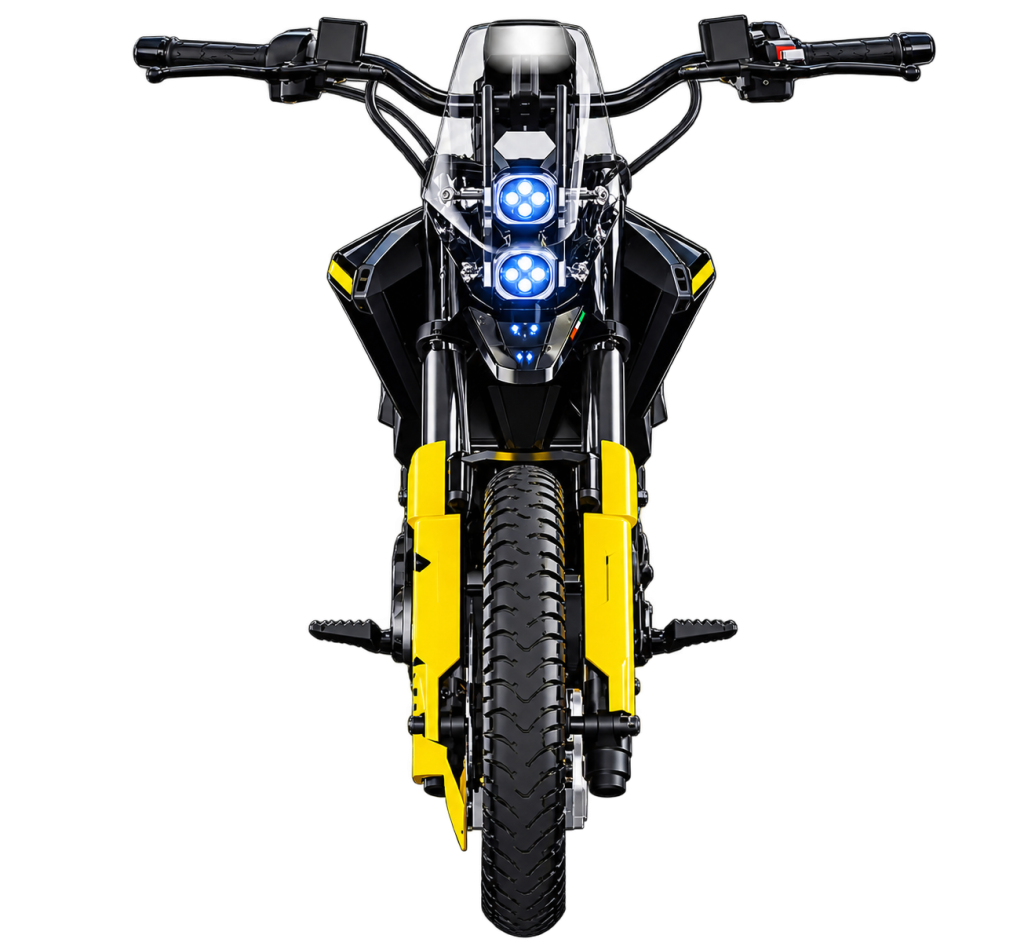
The motorcycle features a compact front section with dual-projector LED headlights.
Its raised front mudguard, wide handlebars and long-travel front suspension contribute to the off-road-inspired appearance.
The minimal front bodywork also gives the Shockwave a distinctive identity compared with conventional commuter motorcycles.
Side Profile
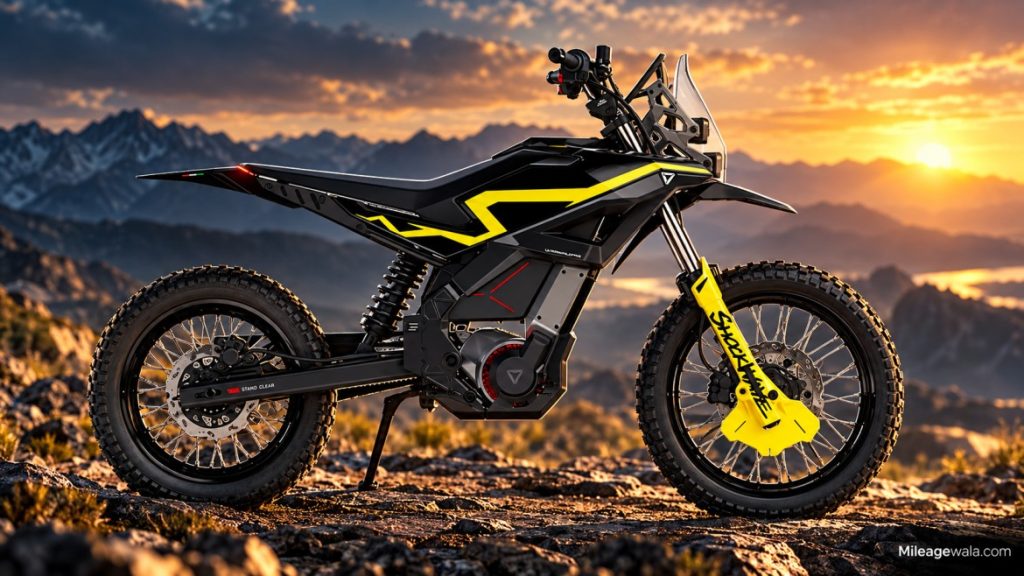
From the side, the Shockwave features a narrow body, exposed frame elements and a relatively tall stance.
The motorcycle uses a 19-inch spoked front wheel and a 17-inch spoked rear wheel in the originally announced configuration.
These different wheel sizes are intended to balance steering responsiveness with stability over uneven surfaces.
The motorcycle’s slim proportions could also make it easier to manoeuvre through traffic and on narrow trails.
Rear Design
The rear section features a compact tail, elevated mudguard and minimal body panels.
The originally unveiled motorcycle was displayed in two colours:
- Cosmic Black
- Frost White
The final production colours and accessories will be confirmed closer to launch.
Rider Comfort, Suspension & Technology
The Shockwave’s riding position has been developed with agility and control in mind.
Its upright handlebars, narrow body and long-travel suspension are particularly relevant for riders interested in light off-road exploration.
Front Suspension
The originally announced Shockwave features a 37 mm cartridge-type telescopic front fork with 200 mm of suspension travel.
This setup is designed to help absorb bumps and uneven surfaces.
Rear Suspension
At the rear, the motorcycle uses a monoshock arrangement with 180 mm of wheel travel.
This gives the motorcycle more suspension movement than a typical road-focused commuter motorcycle.
However, its performance on rough terrain will need to be assessed through independent road and trail testing.
5-Inch TFT Display
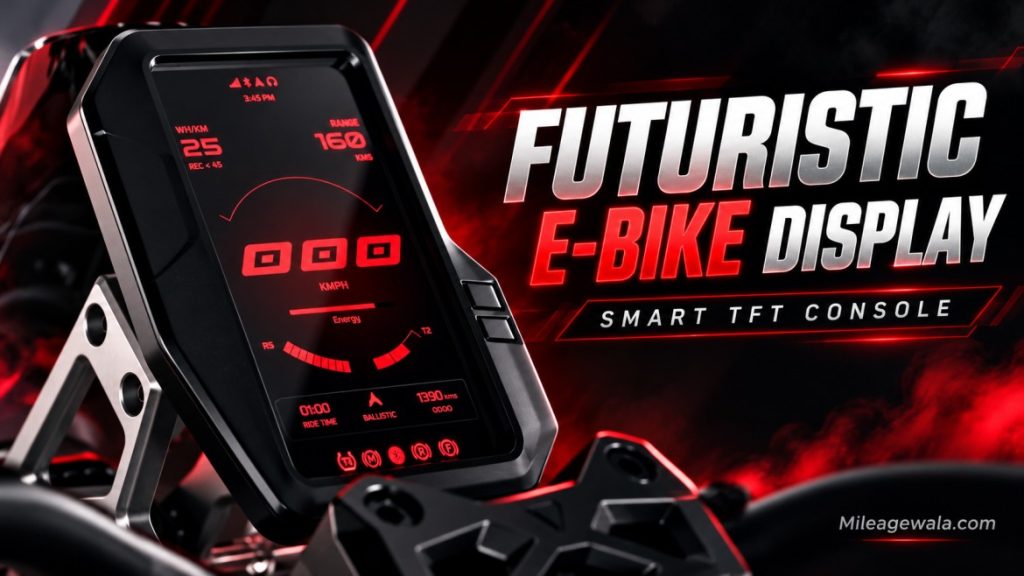
The motorcycle features a 5-inch full-colour TFT display.
The digital instrument cluster is designed to provide essential riding information in a clear layout.
Its compact design suits the motorcycle’s minimal and performance-oriented cockpit.
Single-Seat & Dual-Seat Configurations
The availability of two seating configurations is an important development.
The single-seat version could appeal to riders who prioritise personal adventure riding, while the dual-seat version may offer greater versatility for everyday travel.
Final seat height, passenger accommodation and ergonomic measurements remain to be announced.
Braking & Safety Features
Ultraviolette has introduced several electronic rider-assistance technologies to support the Shockwave’s performance-focused design.
Switchable Dual-Channel ABS
The Shockwave features a switchable dual-channel Anti-lock Braking System.
ABS helps reduce the risk of wheel lock-up during braking.
The switchable function can be useful for experienced off-road riders who want greater control over wheel behaviour on loose surfaces.
However, disabling ABS reduces an important safety intervention and requires appropriate riding skills and conditions.
Disc Brakes
The originally announced motorcycle uses:
| Component | Specification |
|---|---|
| Front Brake | 270 mm Disc |
| Front Caliper | Axially Mounted Dual-Piston |
| Rear Brake | 220 mm Disc |
| Rear Caliper | Floating Single-Piston |
These components are intended to provide controlled braking performance.
Four Traction Control Modes
The Shockwave has been announced with four traction-control settings.
These allow riders to adjust the level of electronic intervention according to riding conditions and personal preferences.
Traction control can help manage excessive rear-wheel slip during acceleration.
Six Regenerative Braking Levels
The motorcycle also offers six levels of dynamic regenerative braking in the originally announced configuration.
Regenerative braking allows the electric motor to recover some energy during deceleration and return it to the battery.
Different settings can change the motorcycle’s deceleration feel when the rider releases the accelerator.
LED Lighting
Dual-projector LED headlights provide the motorcycle’s distinctive front appearance.
Modern LED technology can offer efficient illumination while reducing electrical energy consumption compared with some conventional lighting systems.
Final production safety equipment will be confirmed when Ultraviolette releases the updated model specifications.
Ultraviolette Shockwave 2027 Expected Price in India
The Ultraviolette Shockwave was originally announced at a price of ₹1.75 lakh ex-showroom.
An introductory price of ₹1.50 lakh was also offered to eligible early customers during the initial booking period.
However, these prices belong to the original product announcement.
Ultraviolette has not yet confirmed whether the revised 100V production version will retain the same pricing.
The updated electrical architecture, battery configuration and production costs could influence the final price.
Buyers should therefore treat ₹1.75 lakh as a previously announced reference price rather than a confirmed 2027 quotation.
The final on-road price will depend on the applicable ex-showroom price, insurance, registration and other charges.
Ultraviolette Shockwave 2027 India Launch Date
Ultraviolette officially unveiled the Shockwave in March 2025 alongside the Tesseract electric scooter.
The motorcycle was initially scheduled to reach customers during 2026.
However, the company subsequently revised its engineering plans and decided to introduce its new 100V architecture.
On September 29, 2026, Ultraviolette confirmed that the Shockwave would be launched in the first quarter of 2027, covering January through March.
The manufacturer has also begun preparing its production line for the motorcycle.
Both single-seat and dual-seat configurations have been confirmed.
However, the exact launch date, final variant specifications, booking allocations and customer delivery schedule remain to be announced.
Ultraviolette Shockwave 2027 Competitors
The Shockwave occupies a relatively unusual position in India’s two-wheeler market.
Unlike conventional street-focused electric motorcycles, it is being developed as a lightweight dual-sport machine.
Depending on its final pricing and specifications, it could appeal to buyers considering petrol-powered motorcycles such as:
- Hero XPulse 210
- Hero XPulse 200 4V
- Kawasaki KLX230
- Other lightweight dual-sport motorcycles
These are primarily alternatives based on intended use rather than direct electric competitors.
The Shockwave’s electric powertrain, lightweight design and regenerative braking technology could help differentiate it from petrol-powered motorcycles.
However, charging infrastructure, real-world range and service availability will remain important ownership considerations.
Ultraviolette Shockwave 2027: Pros and Cons
| Pros | Cons |
|---|---|
| Lightweight dual-sport design | Final production specifications pending |
| New 100V electrical architecture | Battery capacity not reconfirmed |
| Strong acceleration claimed for original model | Real-world range untested |
| Long-travel suspension | Limited long-distance touring suitability |
| Switchable dual-channel ABS | Final 2027 pricing unavailable |
| Four traction-control modes | Charging specifications unannounced |
| Single- and dual-seat versions planned | Delivery schedule not confirmed |
These observations are based on the announced motorcycle and development updates rather than an independent production-model review.
Conclusion
The Ultraviolette Shockwave 2027 represents an exciting development in India’s electric motorcycle market.
With its lightweight design, distinctive off-road styling, advanced electronics and responsive electric powertrain, the Shockwave aims to deliver an experience that differs from conventional commuter motorcycles.
The adoption of Ultraviolette’s new 100V electrical architecture is an important technical improvement intended to enhance performance, thermal efficiency and charging capability.
Its originally announced 14.5 hp output, 120 km/h top speed and 165 km IDC range also highlight the motorcycle’s intended balance between performance and practicality.
However, these figures still need to be reconfirmed for the updated production model.
If Ultraviolette delivers competitive pricing, dependable range and enjoyable handling, the Shockwave could become an attractive choice for riders interested in electric adventure riding.
With its launch planned for Q1 2027, the motorcycle is worth watching for customers seeking a lightweight electric dual-sport machine.
 WhatsApp Channel | Join Now✔️ |
 Telegram Group | Join Now✔️ |
Frequently Asked Questions (FAQs)
1. When will the Ultraviolette Shockwave launch in India?
Ultraviolette has confirmed a Q1 2027 launch window, meaning the motorcycle is planned to arrive between January and March 2027.
2. What is the price of the Ultraviolette Shockwave 2027?
The motorcycle was originally announced at ₹1.75 lakh ex-showroom, with an introductory offer of ₹1.50 lakh. Final pricing for the revised 100V model has not been confirmed.
3. What is the range of the Ultraviolette Shockwave?
The original Shockwave was announced with a claimed 165 km IDC range. Ultraviolette has not yet reconfirmed the final range of the 2027 version.
4. What is the top speed of the Ultraviolette Shockwave?
The originally announced motorcycle had a claimed top speed of 120 km/h. Final production performance specifications remain pending.
5. What is the battery capacity of the Ultraviolette Shockwave?
The original model featured a 4 kWh battery. The revised production battery specification has not yet been confirmed.
6. What is new in the 2027 Ultraviolette Shockwave?
The biggest update is its new 100V architecture, designed to improve power delivery, thermal management and charging capability.
7. Is the Ultraviolette Shockwave suitable for off-road riding?
The motorcycle has been developed as a lightweight dual-sport machine with long-travel suspension, spoked wheels and selectable electronic rider aids.
8. Does the Ultraviolette Shockwave have ABS?
Yes. The announced equipment package includes switchable dual-channel ABS.
9. Will the Shockwave offer a pillion seat?
Yes. Ultraviolette has confirmed plans for single-seat and dual-seat configurations.
10. Is the Ultraviolette Shockwave better than the Hero XPulse 210?
The Shockwave offers electric propulsion and advanced electronic controls, while the XPulse 210 offers a petrol engine and easier refuelling on longer journeys. The better choice depends on riding needs, charging availability and the Shockwave’s final production performance.